Choosing the right PP woven bags manufacturer is often challenging, especially when hidden costs, unclear production capabilities, and unstable lead times quietly affect your total sourcing budget. Many buyers face these issues simply because they don’t have a clear framework to evaluate suppliers.
In this article, you’ll get 7 essential criteria that make it easier for you to assess large-scale manufacturers, avoid hidden costs, and make confident, data-driven sourcing decisions with long-term reliability. Let’s get started.
1. Large-scale production capacity
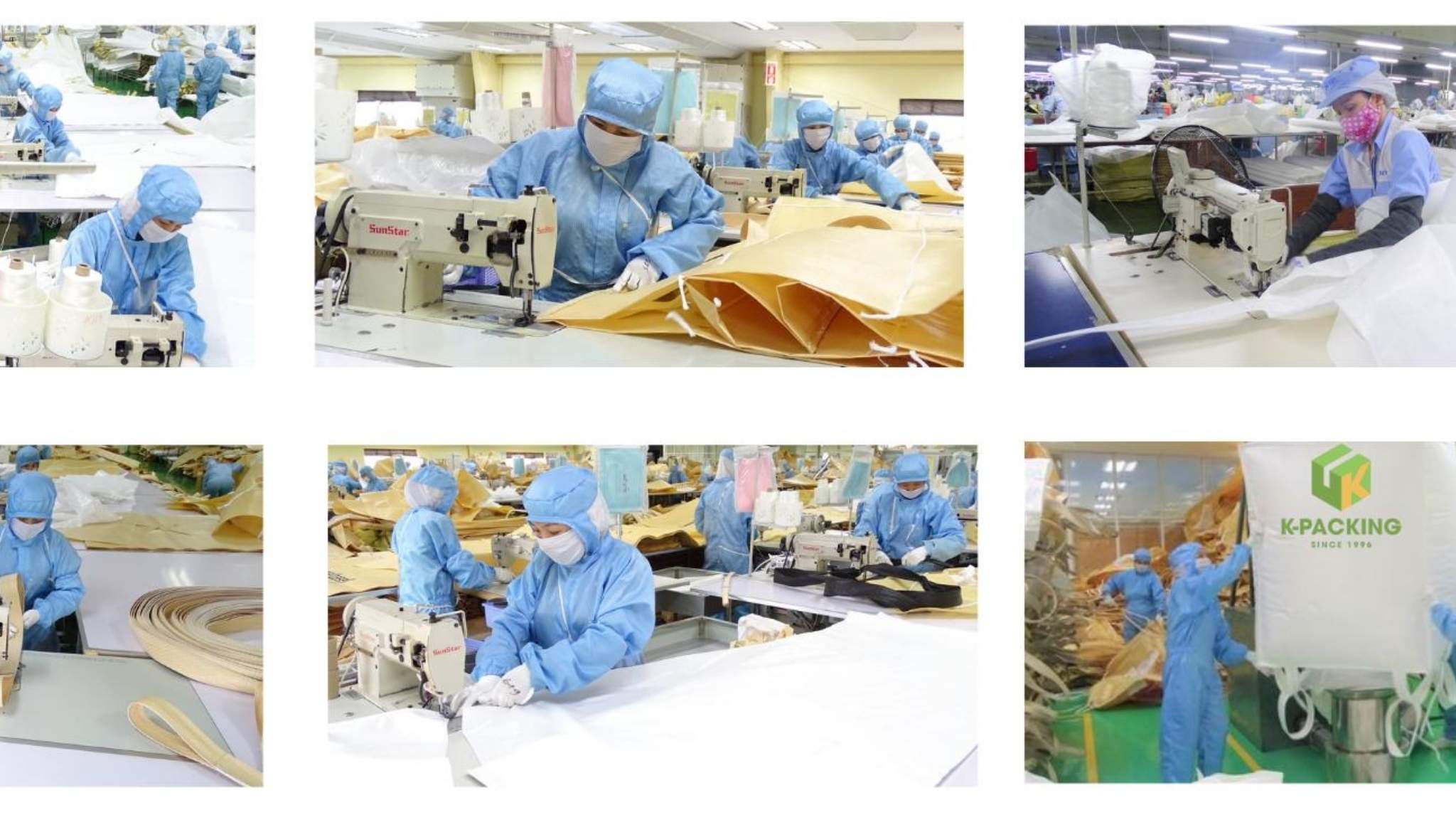
When you assess a factory’s real capacity, it helps to compare it with guidelines from organizations like the International Trade Centre (ITC) and the World Bank’s Global Value Chain reports. Both highlight that manufacturers with fully integrated production – from extrusion and weaving to printing, lamination, and stitching – deliver far more stable output for large orders.
A factory that controls all key steps in-house typically has fewer defects, more predictable lead times, and clearer traceability. You can confirm this simply by requesting a production flow chart, photos, or a short video tour, then comparing what you see with ITC’s publicly available Export Quality Management Guide.
This level of integration often reduces your overall supply-chain cost by 5–10%, because it minimizes delays and avoids the quality inconsistencies that happen when multiple subcontractors are involved. In short, an integrated, high-capacity factory gives you steadier production and far fewer surprises.
2. Global-standard certifications
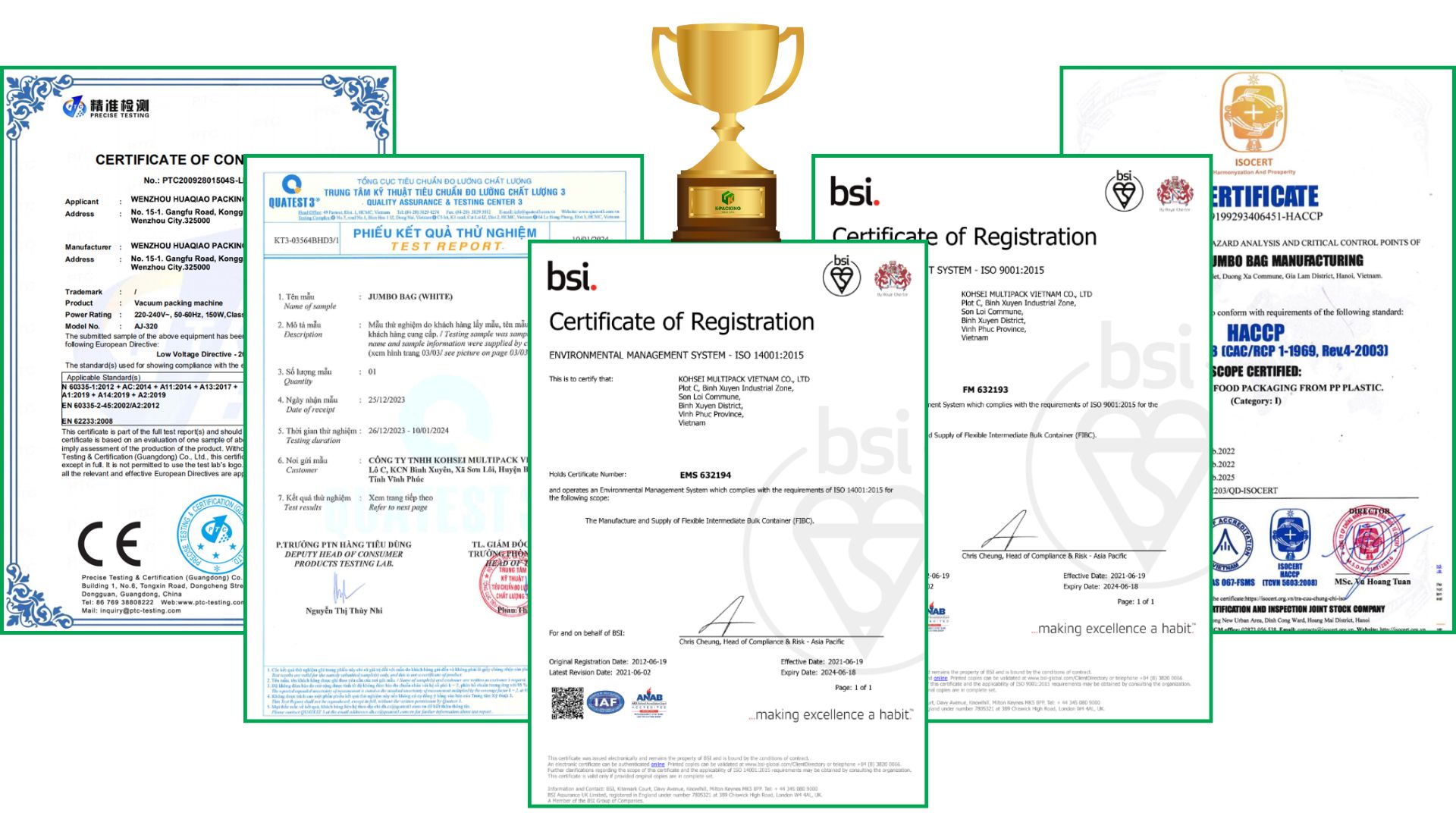
Certifications are valuable only when they come from globally recognized systems that you can check online. The most common ones are ISO 9001 and ISO 14001, accredited under the International Accreditation Forum (IAF). You can verify any ISO certificate in seconds through the official IAF CertSearch website.
For food-contact or retail packaging, BRCGS Packaging Materials is widely accepted in Europe and the UK. Since it’s managed by the British Retail Consortium, you can confirm any certificate directly in the BRCGS public directory.
If your market requires ethical or social compliance, audits like SMETA or SA8000 – created by Social Accountability International (SAI) – are well recognized by US and EU brands. These standards help ensure the factory meets global expectations for labor and workplace safety.
For chemical or heavy-duty packaging, UN Certified FIBC follows safety rules set by the United Nations, and the guidelines are publicly available for review.
All of these certifications have official databases, so you can verify them within minutes and confidently confirm whether the supplier meets international requirements before moving forward.
3. Export reliability & clean documentation
A manufacturer with real export experience will handle documents the way global customs authorities expect. This means using the correct HS codes, preparing invoices properly, and providing complete export files without missing details. You can check this easily by asking for a draft invoice, packing list, or a recent B/L. An experienced exporter will share them without hesitation.
You’ll also notice that export-ready factories follow standard Incoterms formats, which helps you avoid confusion around FOB, CIF, or DAP responsibilities. If their documents look organized and consistent, it’s a good sign they understand international requirements and won’t cause delays at customs.
Clean paperwork matters more than many importers realize. Most shipment delays happen because of simple errors like incorrect HS codes or mismatched information. A factory that exports regularly will already have a smooth documentation workflow, making your import process more predictable and lower risk.
Choosing a supplier with solid export history saves you time, avoids unnecessary fees, and keeps your shipment moving without complications.
4. Reliable lead times & flexible delivery
A reliable manufacturer should keep lead times stable, whether it’s peak season or not. This is a basic requirement in global supply chains, because predictable production helps you plan inventory and avoid costly last-minute logistics.
The easiest way to verify this is to ask for past shipping timelines, production calendars, or a few examples of how they handled busy periods. A factory that manages its schedule properly will show clear, realistic timelines instead of vague estimates.
When lead times are consistent, you avoid emergency airfreight, reduce excess stock, and manage your inventory more efficiently. Often improving overall supply-chain performance by 10–20%.
5. OEM/ODM expertise
Strong OEM/ODM capability is important if you want your packaging to look professional and stay consistent across markets. A good manufacturer should be able to deliver clean printing, stable lamination quality, and accurate bag dimensions that match common global retail expectations.
You can verify this easily by requesting sample portfolios, photos of recent production, or a few physical samples shipped to you. Another quick check is asking whether they follow widely used packaging principles such as GS1 sizing or retail-friendly layout standard – something most experienced exporters are familiar with.
Good customization is not only about appearance. When dimensions are correct and materials are consistent, your cartons load better, you reduce freight waste, and your products look uniform wherever they are sold.
6. Reliable quality control
A reliable QC system should follow recognized methods such as ASTM or ISO mechanical testing standards. These guidelines define how tensile strength, seam durability, and material consistency are measured. You can compare the supplier’s QC reports directly with these public standards to confirm accuracy.
If the factory uses recycled materials, look for compliance with the Global Recycled Standard (GRS) managed by Textile Exchange. This certification is searchable in the official GRS database and helps you confirm supply-chain integrity.
Clear testing data and traceability protect you from unexpected failures in container-level shipments and demonstrate that the manufacturer follows international norms instead of internal, unverified methods.
7. Verified reputation & transparency
A dependable manufacturer should be easy for you to verify. The fastest way is to ask for their business registration or tax ID, then check it on the public registry in their country. This confirms the company is active and legally recognized.
You can also look them up on credible industry listings or trade directories, which typically screen businesses before listing them. This gives you a quick sense of whether they have a real presence in the market.
Requesting a recent Bill of Lading is another simple proof of export activity. Even with pricing hidden, it shows they ship to real destinations and work with recognized carriers.
For production capability, nothing is clearer than a live video factory tour or an in-person visit. Seeing the equipment, workflow, and warehouse directly helps you judge professionalism and scale much better than any brochure or profile.
These quick checks – registration, listings, B/L, and a factory tour – give you a reliable snapshot of the supplier’s transparency and real operational strength.
Conclusion
When you clearly understand these seven criteria – from production capacity and global certifications to QC systems, lead-time stability, and supplier transparency – you’ll be able to choose a PP woven bags manufacturer that truly fits your sourcing requirements. This knowledge helps you avoid hidden costs, reduce operational risks, and build long-term reliability in your supply chain.
In addition, you can further minimize risks by requesting product samples, arranging a video factory tour, or even scheduling an on-site visit before placing large orders. These simple verification steps give you a realistic view of the supplier’s quality, workflow, and operational scale – far more accurate than relying on brochures alone.
If you are looking for a stable, transparent, and export-ready manufacturing partner for large-volume orders, K-Packing is ready to support your business.
Get in Touch & Request Your Free Sample
Experience K-Packing’s product quality before you buy. Talk to our team about your packaging requirements and receive a free PP woven bag sample delivered to your address.
📞 Phone: (+84) 855 555 751
📧 Email: info@k-packings.com | sale@k-packings.com
📍 Address:
🇺🇸 USA: 7319 N. Loop 1604 E, San Antonio, TX 78233
🇦🇴 ANGOLA: Av. Pedro de Castro Van-Dúnem Loy, Luanda
🇻🇳 VIETNAM: 169 Nguyen Ngoc Vu Street, Cau Giay District, Hanoi