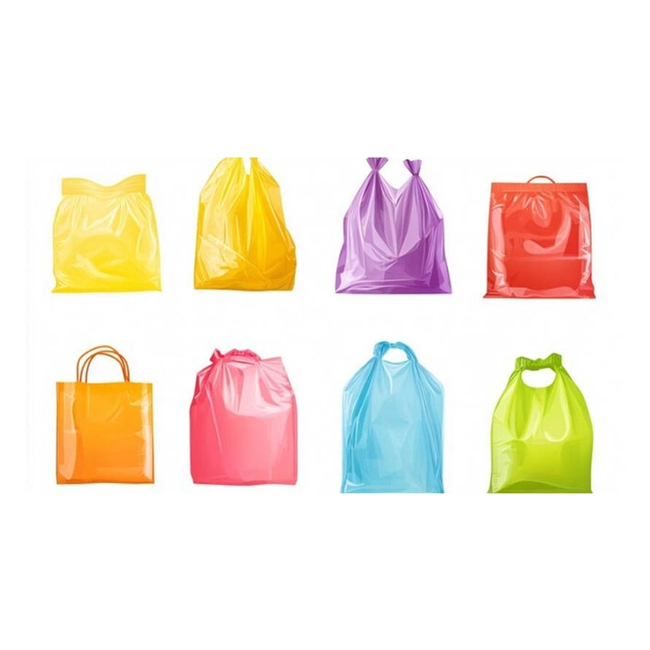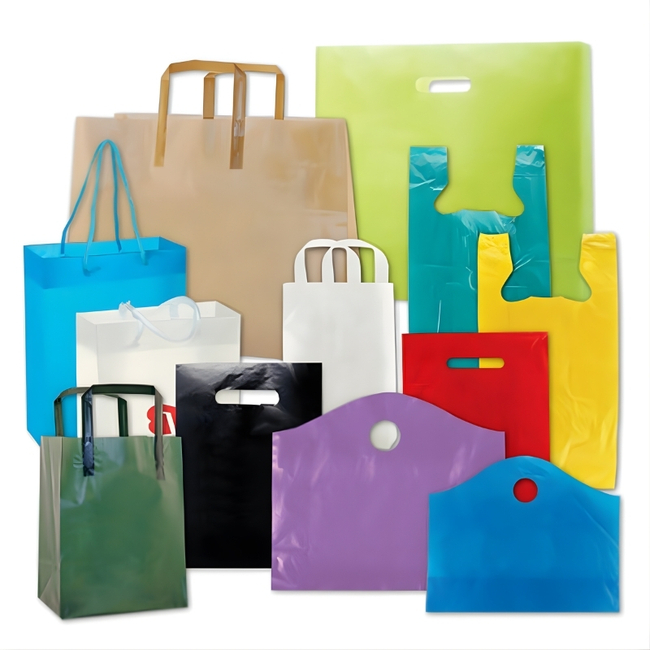
Designing shopping bags with your brand name is a great chance for you to express your identity and add a professional touch to every purchase. With the right materials, colors, and layout, your bag becomes more than packaging – it becomes a small extension of your brand that customers carry everywhere.
In this article, you’ll discover a few simple insights that help you avoid common mistakes and create bags that look better, last longer, and reflect your brand more clearly. A few small improvements can make a big difference, and you’ll see how to make your shopping bag brand name shine even brighter.

1. Prioritizing Price Over Material and Build Quality
Many buyers focus too heavily on getting the lowest unit price, and this leads suppliers to reduce material thickness, stitching strength, and print quality. The result is a bag that tears early, fades quickly, or feels cheap in customers’ hands. This reduces your brand visibility because a bag that breaks after one or two uses never gets carried around in public long enough to promote your business.
Choosing based on price alone also creates a hidden cost: your brand looks less premium when the bag itself looks fragile or poorly made. Customers may associate that lack of quality with your products.
You can easily check whether you’re making this mistake by asking yourself a few questions:
- Did the supplier provide clear GSM or material specifications?
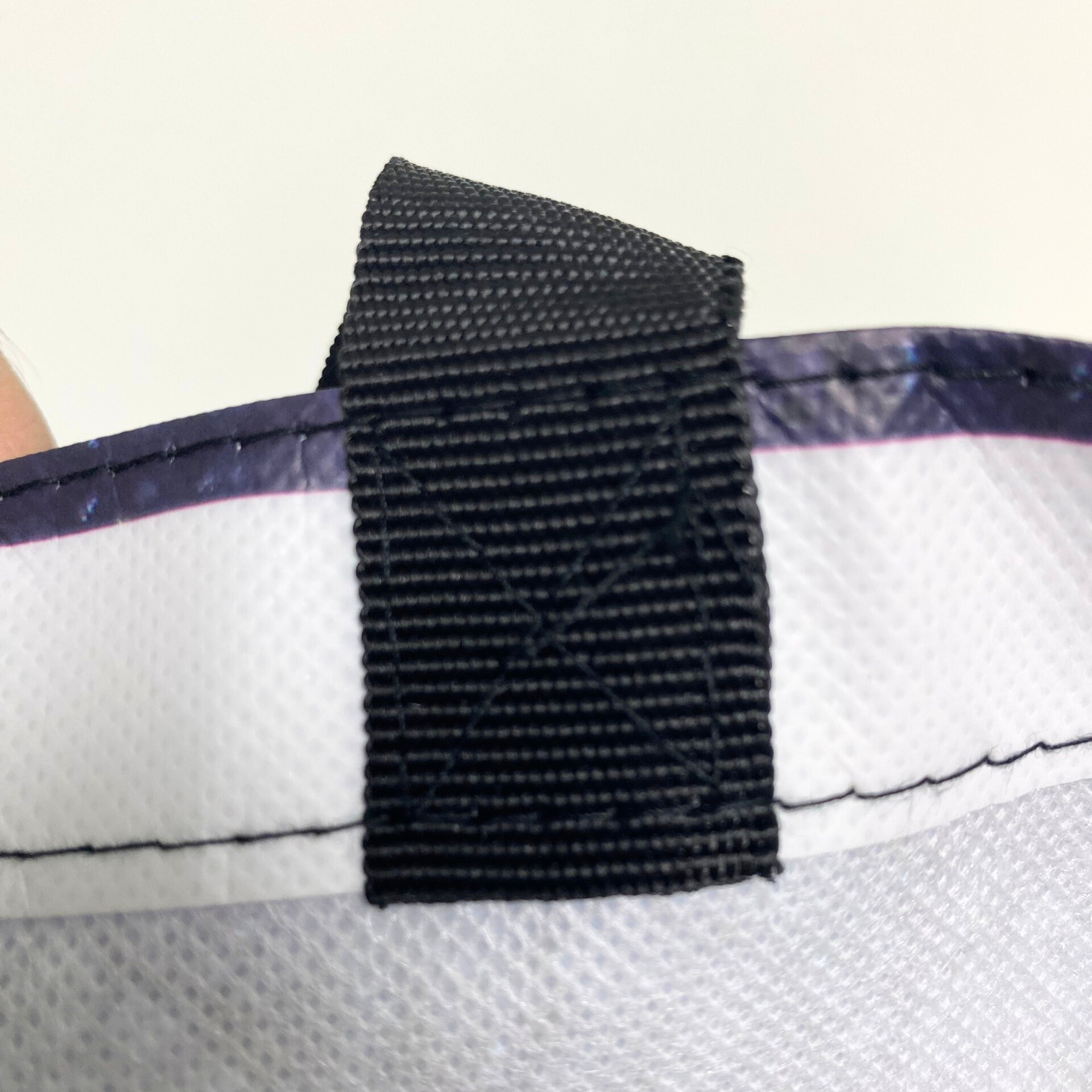
- Are the handles reinforced or double-stitched, especially for heavier loads?
- Have you inspected a physical sample with real products inside?
- Do you know the difference between heat-sealed vs. stitched handles?
If any point is unclear or missing, you’re likely prioritizing price over true long-term value.
2. Ignoring Bag Size, Capacity, and Structural Design
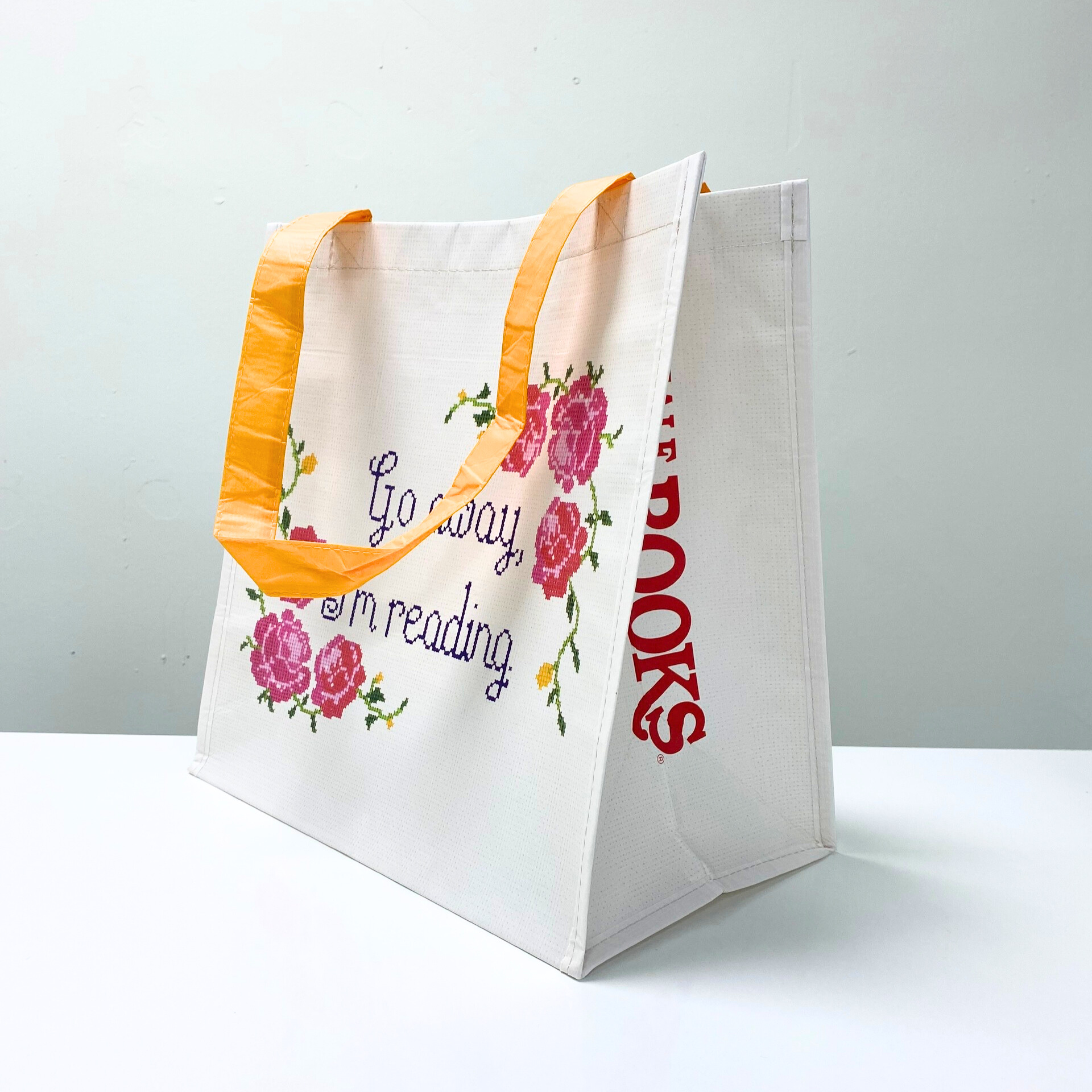
A common mistake is picking a standard size without measuring your actual products or thinking about how customers will use the bag. Bags that are too small damage your packaging, while oversized bags look unbalanced and waste material. Elements such as the gusset, base shape, and handle length all influence the comfort, durability, and appearance of your bag.
Incorrect sizing also affects how your logo appears. For example, a wide logo placed on a narrow, tall bag can look squeezed or misaligned. Similarly, a deep gusset can change how the print looks when the bag is full.
You can check this quickly by reviewing your typical products and asking:
- Have I measured the width, height, and thickness of the items the bag must hold?
- Does the gusset provide enough room so the bag won’t deform?
- Is the handle length comfortable for both hand-carry and shoulder-carry?
- Does my logo orientation match the bag’s shape (wide, tall, or square)?
If the size, shape, and usage don’t align, you should revisit your dimensions before placing an order.
3. Using Low-Resolution or Wrong-Format Artwork Files
Many customers send logos as small JPEGs, screenshots, or low-resolution images pulled from websites. These files may look fine on screen but become blurry, pixelated, or jagged when enlarged for printing. Once a full production run is printed incorrectly, it’s very difficult and costly to fix.
Poor artwork quality harms your brand by making the bag look unprofessional. Customers may feel that the weak print reflects your overall attention to detail, even if your actual products are high quality.
To check this yourself, follow a few simple steps:
- Make sure your logo is a vector file (AI, EPS, PDF).
- If you only have PNG/JPEG, ensure it is 300 DPI at the final print size.
- Zoom your logo to 300–400% on your screen; if the edges look rough, the file is not suitable.
- Ask your supplier for their artwork specification sheet.
- Always request a print proof to confirm sharpness on the real material.
If any of these checks fail, your artwork is not ready for production yet.
4. Failing to Account for Color Contrast and Bag Color
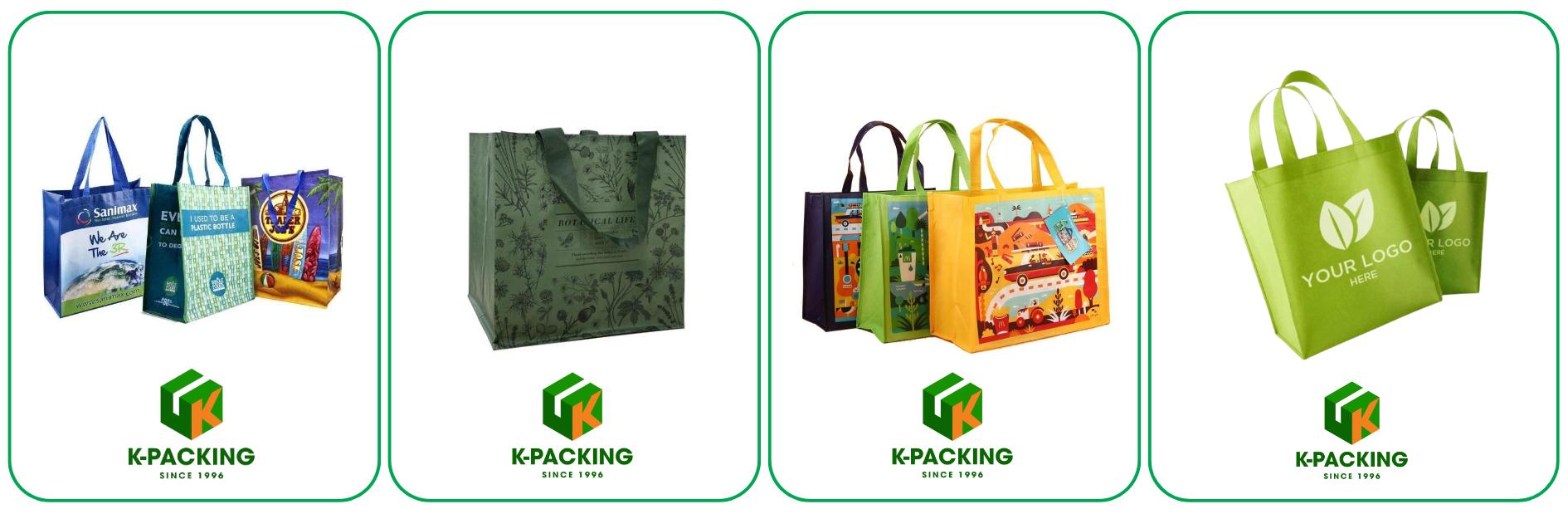
A frequent issue occurs when the logo color and the bag color do not contrast enough. For example, dark blue on black, light yellow on beige, or pastel tones on light fabric all result in a logo that becomes nearly invisible from a distance. Even if the design looks nice on a computer screen, the real-life print often loses impact when the contrast is weak.
This matters because the main purpose of a logo bag is visibility. If customers cannot easily notice your logo while the bag is being carried, your brand message is effectively lost. Poor contrast also makes the bag appear dull and less premium, which can affect a customer’s perception of your brand quality.
You can quickly check for this mistake by doing a few simple tests:
- Look at your design in grayscale – if the logo and bag blend together, the contrast is too low.
- Print the design on paper at actual size to see how visible it is from 1–2 meters away.
- Ask the supplier whether they offer Pantone (PMS) matching to ensure exact color accuracy.
- Request a mockup on the actual bag color, not just a white background.
If visibility is weak in any of these checks, you likely need stronger contrast or adjusted colors.
5. Overcomplicating Design and Typography
Many buyers include too much information on the bag: logo, slogan, website, QR code, contact icons, product lines, and promotional text. This creates a cluttered look that is hard for customers to process. On fabric materials – especially non-woven, jute, and canvas – fine details and small text often do not print cleanly, which further reduces clarity.
A messy or crowded design makes the bag look cheap. Customers usually look at a bag for just a second or two; if the message isn’t instantly clear, they won’t remember your brand. Typography issues such as thin fonts, tiny text, or mixing too many font styles also damage readability and disrupt brand consistency.
You can check your design with a simple clarity test:
- Step back 1–2 meters from the printed mockup. Can you read everything instantly?
- Hide the details and ask: If someone only glances for 2 seconds, what stands out?
- Zoom into your digital file at 100% and 200% to see if fonts stay crisp.
- Remove all non-essential elements and see if the design looks stronger.
If the design becomes clearer when simplified, it’s a sign that your original layout was overcrowded.
6. Overlooking Logo Placement and Sizing
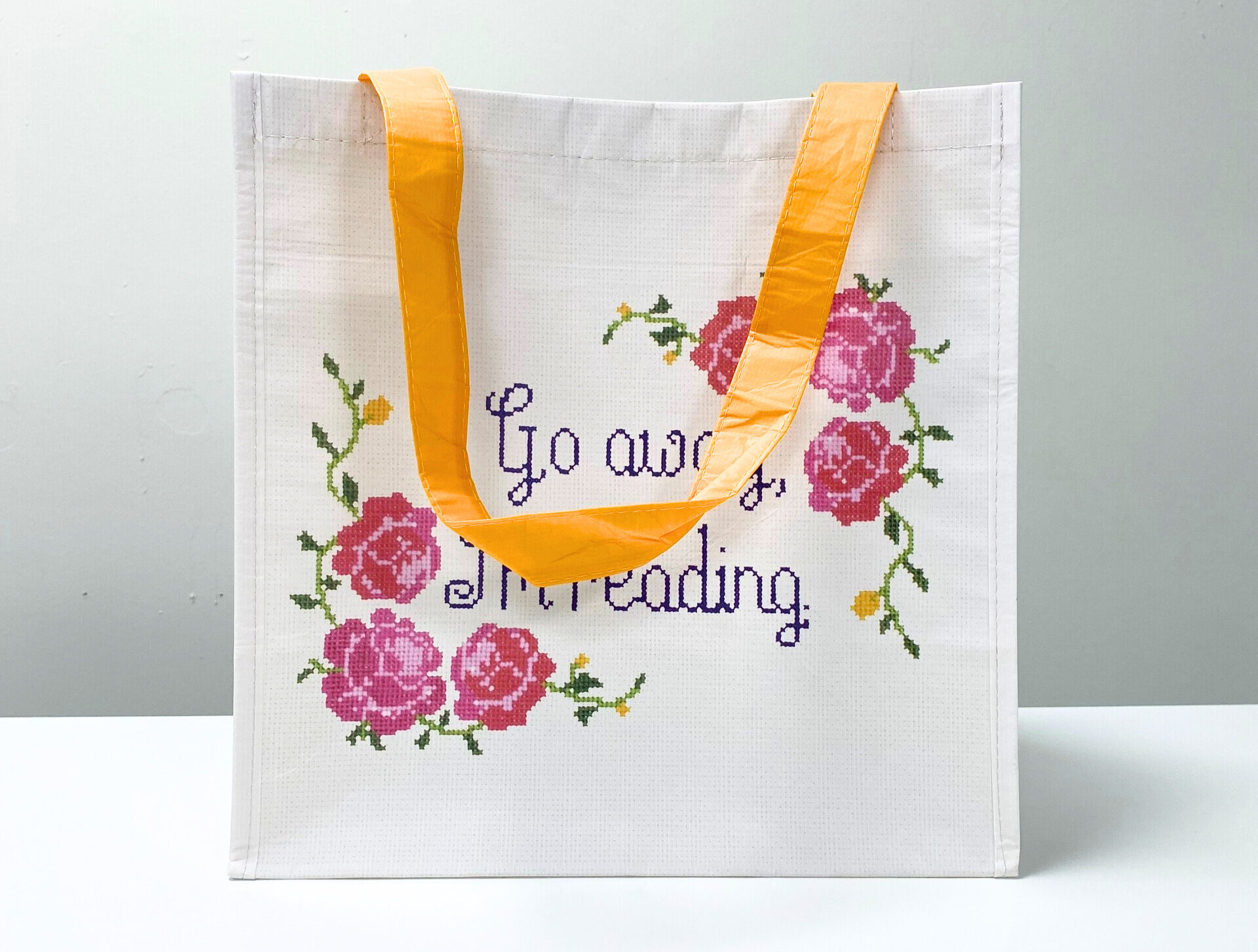
Even when the design is good, poor placement or sizing can cause the logo to lose visibility. Placing the logo too low, too close to seams, or too close to the gusset can distort the print when the bag is full. A logo that is too small looks lost on large bags, while an oversized logo on small bags feels cramped and unbalanced.
Placement is crucial because customers mostly view a bag while someone is carrying it. If the logo sits in a low, awkward, or fold-prone area, fewer people will actually see it. And once a production run is printed incorrectly, the cost of reprinting can be very high.
To confirm your placement is correct, review these quick checks:
- Is the logo centered vertically and horizontally on the printable area?
- When the bag is filled, does the logo get folded, stretched, or hidden?
- Is the logo at least 60–70% of the bag’s width (for most rectangular tote bags)?
- Did you view a scaled mockup on the actual bag template, not just on a blank canvas?
If the logo seems too small, too low, or distorted during use, the placement needs adjusting.
7. Skipping Proofs, Samples, and Final Checks
Some buyers rush the ordering process and skip digital proofs or physical samples. Without reviewing these final checks, mistakes such as misaligned prints, wrong colors, poor ink adhesion, or incorrect dimensions often go unnoticed until the entire batch is produced.
This becomes a costly problem because errors discovered after mass production usually require reprinting or accepting a batch that does not meet your expectations. Missing this step also means you cannot confidently predict the customer experience with the final product.
You can avoid this risk by confirming a few essential points before approval:
- Review a digital proof showing exact size, placement, spacing, and colors.
- Request a pre-production sample (PPS) whenever possible.
- Compare the sample with your expectations for stitching, color accuracy, texture, and handle quality.
- Test the bag with real products to confirm durability and overall feel.
If anything looks off during these checks, you should adjust before giving final approval for mass production.
Conclusion
These are the 7 most common mistakes buyers like you often make when ordering wholesale shopping bags with their brand name. By knowing them in advance, you can make better decisions, avoid unnecessary risks, and ensure that every bag truly reflects the quality of your brand. And if you ever feel unsure, you can always request a factory visit or ask for a pre-production sample – both are simple ways for you to gain full confidence before placing large global orders.
Whether you operate a retail chain, a promotional agency, or an international brand, working directly with a factory partner gives you more control, stronger consistency, and clearer visibility over every step of production. That’s the advantage of going factory-direct.
Contact Us Now to Get Your Company’s Best Factory Price and a Free Sample
Experience K-Packings’ global factory-direct quality before you place your order. We support buyers worldwide with fast quotations, OEM/ODM customization, and a free shopping bag sample delivered straight to your address.
📞 WhatsApp / Phone: (+84) 855 555 751
📧 Email: info@k-packings.com | sale@k-packings.com
🌍 Address:
🇻🇳 VIETNAM (Head Office & Factory): 169 Nguyen Ngoc Vu Street, Cau Giay District, Hanoi
🇦🇴 ANGOLA: Av. Pedro de Castro Van-Dúnem Loy, Luanda
🇺🇸 USA: 7319 N. Loop 1604 E, San Antonio, TX 78233