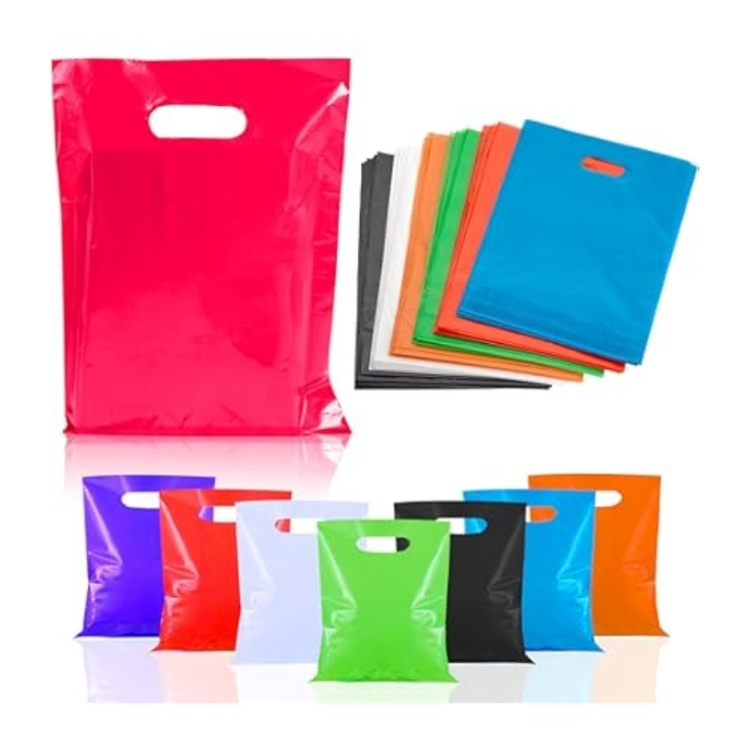
This is for you if you are a food manufacturer, food processor, wholesaler, private label owner, or exporter looking for cost-effective plastic bag packaging for food while operating on a thin profit margin of 1–5%.
You need PP or RPET food-grade packaging that is strong enough for industrial use, meets food safety requirements, runs reliably on packing lines, and does not increase your cost per unit. At the same time, pressure to reduce single-use plastic means you must optimize materials without sacrificing quality or safety.
Below are 7 practical factors that address sourcing, PP and RPET material optimization, shelf-life extension, sealing and tearing reduction, and stable printing for large-volume orders. Collectively, these factors help reduce total packaging costs by 35–60% while maintaining food safety, operational efficiency, and brand consistency.

1. Vietnam Sourcing
The biggest cost reduction comes from where you source your packaging. When you source PP and RPET packaging from Vietnam, you benefit from direct access to raw materials and export-oriented manufacturing.
Labor cost is the key driver. In Vietnam, average manufacturing labor is USD 2–3 per hour, compared to USD 29–45 per hour in the US, EU, or Japan. This difference alone allows you to reduce total packaging costs significantly, without changing specifications or quality levels.
At K-packing, production is set up in Vietnam specifically to leverage local material access and labor efficiency, while maintaining export-grade quality control.
2. Material optimization
Compared to traditional thick single-layer PE or PP bags, well-designed PP/RPET film structures can achieve the same or higher mechanical strength with 10–20% less film thickness. In terms of protection, multi-layer PP/RPET films typically reduce oxygen transmission and moisture transmission by around 30–50%, depending on the product and packaging structure.
By choosing the right PP and RPET structure, you usually reduce raw material costs by 15–25%, while maintaining strength, puncture resistance, and shelf-life performance. You avoid paying for extra material that does not improve real packaging function.
K-packing supports this by designing PP and RPET structures based on your actual product weight, packing speed, and shelf-life needs, rather than using unnecessarily thick or complex designs.
3. Food Safety Compliance
4. Stable Sealing
PP and RPET films have a wide and stable sealing temperature range, usually within ±10–15°C. This makes your packaging machines easier to run and less sensitive to small temperature changes, even at high speed or during long production shifts.
In daily operation, this stability typically reduces seal-related defects by around 20–30%. You see fewer leaks, fewer open seals, and a lower reject rate. Less film is wasted, line efficiency improves, and your cost per packed unit goes down.
5. High Mechanical Strength
PP and RPET bags are engineered with high tensile strength and good puncture resistance, making them reliable on automatic form-fill-seal lines and in demanding packing conditions.
In real production, this typically reduces bag tearing and puncture-related issues by around 15–25% compared to lower-grade films. For you, that means fewer machine stops, less rework, and more stable output. Labor time and material waste are reduced, and your packaging line runs more smoothly from shift to shift.
6. Longer Shelf Life
PP and RPET multi-layer packaging protects your food from oxygen, moisture, and external odors. These three factors are the main causes of quality loss during storage, long-distance transport, and wholesale distribution.
In real applications, this typically extends shelf life by 20–40%, depending on the food category. For you, this means fewer expired products, fewer customer complaints, and lower return rates-especially in export and bulk distribution channels where storage time is longer.
K-packing confirms barrier performance through application-based testing, matching material structure to your product type and target shelf life rather than using assumptions.
7. Premium Gravure Printing
Gravure printing supports 8–10 colors and keeps print quality consistent when you produce large volumes. Your packaging looks the same from the first roll to the last, even across repeat orders.
Because colors stay consistent, you avoid reprints, rejected rolls, and color-related complaints. This reduces printing waste and prevents extra setup or correction costs. For large and repeat orders, gravure printing helps lower the cost per unit, even while maintaining a professional shelf appearance.
Final thought
The seven factors below focus on where costs are actually reduced across sourcing, materials, production efficiency, and compliance. Together, they show how you can lower packaging costs by 35–60% while keeping food safety, performance, and quality unchanged.
ore manufacturing can also be considered as part of a broader sourcing strategy. By working directly with experienced overseas manufacturers, many companies achieve 35–60% cost savings while maintaining export-ready quality standards. K-Packings Vietnam supplies plastic bags to customers in more than 30 countries, supporting brands, wholesalers, and distributors with reliable large-scale manufacturing, consistent quality control, and standard lead times of 15–25 days, depending on order specifications and volume.
Get Free Plastic Bag Samples for Your Business Today
Before placing a bulk order, you can get free plastic bag samples to evaluate material strength, thickness consistency, sealing performance, and print clarity. You are also welcome to visit the factory to review production processes and quality control systems in person, helping reduce sourcing risk before committing to high-volume orders.
Contact
WhatsApp / Phone: (+84) 855 555 751
Email: info@k-packings.com | sale@k-packings.com
Address:
- USA: 7319 N. Loop 1604 E, San Antonio, TX 78233, United States
- Angola: Av. Pedro de Castro Van-Dúnem Loy, Luanda, Angola
- Vietnam: 169 Nguyen Ngoc Vu Street, Cau Giay District, Hanoi